
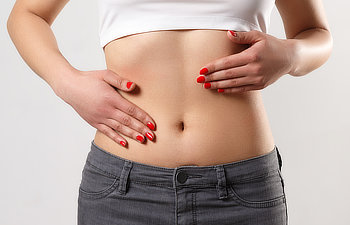
Pregnancy reshapes the abdominal wall in ways that go far beyond appearance. For many women, the months and years that follow delivery bring not only changes in contour but real structural concerns — ventral hernias, eventrations, separated muscle layers, and a weakened core that affects how the body moves, lifts, and recovers. These are not cosmetic issues alone. They are functional ones, and they often times deserve a surgical approach built around restoring the abdominal wall to a strong, stable, and protective state.
At Core Surgical in Midtown Manhattan, Dr. Mark Zoland focuses on the complex reconstructive work that post-pregnancy patients often need. With more than two decades of experience in advanced hernia repair and abdominal wall reconstruction, Dr. Zoland brings together classical surgical training and modern minimally invasive technique to address the underlying structural problems that aesthetic procedures alone cannot resolve. Patients travel from across the tri-state area and beyond to be evaluated for complex, recurrent, or post-pregnancy cases.
Surgical Expertise Built on Decades of Reconstructive Work
Dr. Mark Zoland is a board-certified general surgeon and Fellow of the American College of Surgeons since 2001. He earned his bachelor’s degree from Columbia University and his medical degree from Cornell University Medical College, and has spent more than 20 years focused on minimally invasive and conventional hernia surgery, abdominal wall reconstruction, sports hernia surgery, and re-operative cases. He is the author of
Deciphering Groin and Pelvic Pain and has consulted for professional sports organizations across the NBA, NFL, MLS, MLB, and NHL — work that has refined his approach to the mechanics of the abdominal wall and core stability.
“For many women, the abdominal wall changes that follow pregnancy are not only a cosmetic concern but a functional one,” says Dr. Zoland. “Hernias and eventrations can affect how patients move, exercise, and feel in their own bodies. Our goal is to restore that functionality — and when appropriate, to do it within one carefully planned procedure rather than asking patients to recover from surgery twice.”
What Is Post-Pregnancy Abdominal Wall Reconstruction
The abdominal wall is a layered structure of muscle, fascia, and connective tissue that stabilizes the core and protects the abdominal organs. Pregnancy stretches every one of those layers. In most women, the tissues recover with time and conditioning, but in others, the changes persist or leave behind defects that require surgical correction.
Post-pregnancy abdominal wall reconstruction addresses the structural problems that can follow childbirth, including:
- Ventral Hernias: Protrusion of abdominal contents through an opening in the abdominal wall, often along the midline.
- Eventrations: Bulging or thinning of the abdominal wall caused by stretched or compromised muscle and fascial layers.
- Incisional Hernias: Hernias that develop at the site of a prior cesarean section or other abdominal surgery.
- Rectus Diastasis with Hernia: Separation of the rectus abdominis muscles that often coexists with a true hernia and contributes to core weakness.
- Recurrent or Complex Defects: Hernias that have returned after a prior repair or that involve multiple layers of the abdominal wall.
The goal of reconstruction is to restore continuity, strength, and function to the abdominal wall — not simply to close a defect, but to rebuild the integrity of the muscle and fascial layers so the core can support the body the way it did before pregnancy.
Why Functional Restoration Matters
Many women live with post-pregnancy abdominal wall changes for years before realizing the issue is structural. A persistent bulge, ongoing discomfort with lifting or exercise, a sense that the core is weaker or unstable — these symptoms are often attributed to weight, deconditioning, or aging, when in fact they reflect a true mechanical defect.
Common concerns that bring patients to Core Surgical include:
- Visible Bulging Or Asymmetry: A protrusion along the midline or near the navel that becomes more obvious with standing, coughing, or exertion.
- Discomfort With Activity: Pulling, pressure, or pain during lifting, exercise, or core engagement.
- Difficulty Returning To Fitness: An inability to rebuild abdominal strength despite consistent training or physical therapy.
- Symptoms After A Prior Repair: Recurrence of a hernia or new symptoms following an earlier abdominal surgery.
- Combined Aesthetic And Functional Concerns: A desire to address both the structural defect and the contour changes that often accompany it.
When the underlying problem is mechanical, no amount of conditioning or aesthetic surgery alone will fully correct it. Reconstruction addresses the cause.
Collaborative Care With Dr. Ryan Neinstein
For patients whose post-pregnancy concerns include both functional defects and aesthetic considerations, Dr. Zoland collaborates with Dr. Ryan Neinstein, a board-certified plastic surgeon and founder of Neinstein Plastic Surgery, one of the most soughtsought-after aesthetic practices in New York. The Neinstein group has become known as the cosmetic team for high profile patients throughout the United States and the world. The partnership brings together two highly specialized skill sets — complex abdominal wall reconstruction and advanced aesthetic surgery — within a single, carefully coordinated procedure.
In these joint cases, Dr. Zoland focuses on rebuilding the functional integrity of the abdominal wall: repairing hernias and eventrations, addressing fascial defects, and restoring the muscle and connective tissue layers. Dr. Neinstein contributes the added structural and aesthetic component, refining contour and appearance once the deeper work is complete. The combined approach allows patients to address both sets of concerns in one carefully planned surgery rather than through separate procedures spaced months apart, with one anesthesia, one recovery, and a coordinated surgical plan from the outset.
Not every patient is a candidate for a combined procedure, and not every patient needs one. Many post-pregnancy reconstructions are performed by Dr. Zoland alone. The collaboration is reserved for cases where the functional and aesthetic concerns are both significant enough to justify a comprehensive approach.
What to Expect From the Process
Reconstruction begins with a thorough consultation. Dr. Zoland reviews each patient’s pregnancy history, prior surgeries, current symptoms, and goals, and performs a clinical examination of the abdominal wall. At times, imaging such as sonogram, CT or MRI is used to map the location and size of any hernias, the integrity of the fascial layers, and any other structural findings that will inform the surgical plan.
For patients pursuing a combined procedure with Dr. Neinstein, both surgeons participate in the planning phase so the reconstructive and aesthetic components are sequenced and integrated from the start. Surgery is performed in a hospital or accredited surgical facility, with the technique tailored to the specific defect — open, laparoscopic, or a combination, with mesh reinforcement when indicated.
Recovery is gradual. Most patients are walking the same day or the next, with activity restrictions in the early weeks to allow the repair to heal. Full return to exercise and core-loading activity is typically staged over several months, guided by clinical follow-up.
Frequently Asked Questions About Post-Pregnancy Abdominal Wall Reconstruction
Is a post-pregnancy bulge always a hernia?
Not always. A persistent bulge after pregnancy can reflect a true hernia, an eventration, rectus diastasis, residual skin and soft-tissue changes, or a combination of all of these. A clinical evaluation — often with imaging — is the only reliable way to distinguish between them and identify which findings require surgical repair.
How long after pregnancy should I wait before considering reconstruction?
Most surgeons recommend waiting until the body has fully recovered from delivery and the patient has reached a stable weight, typically at least six to twelve months postpartum and after any planned future pregnancies. Dr. Zoland reviews each patient’s individual timeline during consultation.
Can hernia repair and a cosmetic procedure really be done together safely?
In appropriately selected patients, yes. Combined procedures are planned carefully between Dr. Zoland and Dr. Neinstein, with attention to surgical sequencing, anesthesia time, and recovery. Not every patient is a candidate, and the decision is made based on the complexity of the hernia, the patient’s overall health, and the aesthetic goals involved.
Will mesh be used in my repair?
It depends on the size, location, and complexity of the defect. For larger or recurrent hernias, mesh reinforcement is often used to reduce the risk of recurrence and provide long-term structural support. For smaller defects, a primary tissue repair may be appropriate. Dr. Zoland discusses the options and rationale before surgery.
How long is the recovery from a post-pregnancy reconstruction?
Recovery varies with the complexity of the repair. Most patients return to light daily activities within one to two weeks, with restrictions on lifting and core-loading exercise for several weeks beyond that. Full return to athletic activity is typically staged over two to three months, guided by clinical follow-up.
Will my insurance cover the procedure?
This depends on the specific insurance and the benefit structure. In general, cosmetic components are often not covered by insurance, while the hernia/functional repair may be. Our team can help patients understand the financial and coverage details before surgery.
Why Patients Choose Core Surgical
- Decades Of Reconstructive Experience: Dr. Zoland has spent more than 20 years focused specifically on hernia repair, abdominal wall reconstruction, and re-operative surgery.
- Board Certification And Fellowship: Board-certified general surgeon and Fellow of the American College of Surgeons since 2001.
- Complex And Recurrent Case Expertise: A practice built around the cases that other surgeons refer out — recurrent hernias, multilayered defects, and reconstructions following prior repair.
- Coordinated Multidisciplinary Care: Collaborative partnership with Dr. Ryan Neinstein for patients whose functional and aesthetic concerns are best addressed together.
- Authorship And Professional Recognition: Author of Deciphering Groin and Pelvic Pain and consultant to professional sports organizations across the NBA, NFL, MLS, MLB, and NHL.
- Patient-Centered Approach: Individualized surgical planning, in-depth consultations, and a practice culture built around clarity, advocacy, and follow-through.
Schedule a Consultation in Midtown Manhattan
If pregnancy or other issue has left you with a hernia, an eventration, or persistent abdominal wall weakness that affects how you move and feel, a focused surgical evaluation can clarify what is happening and what can be done about it. Dr. Mark Zoland and the team at Core Surgical in Midtown Manhattan, NYC, offer specialized post-pregnancy abdominal wall reconstruction — including combined aesthetic procedures when both functional and aesthetic concerns are present. To schedule a consultation, contact Core Surgical or call (212) 628-8771.
Posted on behalf of
133 E 58th St Suite 703
New York, NY 10022
Phone: (212) 628-8771
Email: [email protected]
Monday - Thursday: 9:00AM to 5:00PMFriday: 9:00AM to 4:00PM
Saturday - Sunday: Closed